
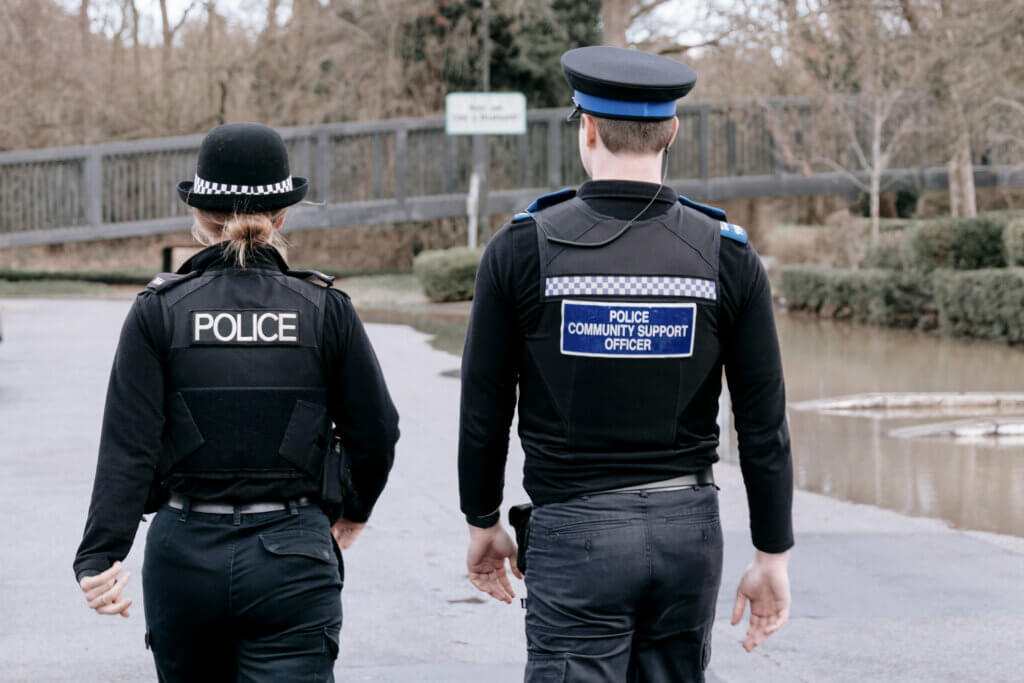
Safer schools partnership
The Safer Schools Partnership is a collaboration between Thames Valley Police and education settings
The Safer Schools Partnership in Thames Valley has the following aims:
- To ensure that the whole school community including our children, school staff, parents, and the local community have a safe environment in which to study, work and visit
- To ensure all Thames Valley Police activity in schools is conducted in line with TVP’s Child Centred Policing Strategy, treating every child as a child, not a mini-adult, each with their own unique experiences and heritage
- To help children deal with situations that may result in their becoming victims of crime and bullying
- To take early action to ensure pupil safety and to prevent children from being drawn into crime or antisocial behaviour
- To improve children’s relations with the police and the local community
- To provide access to resources to support schools with delivery of crime and community safety education through the Crime Education Hub
The partnership provides a fantastic opportunity for the OPCC and Thames Valley Police to engage with children, to support their education, work alongside schools to offer advice and a positive influence.
Every school educating students in Key Stage 3 and older will be supported by a named Schools Officer from Thames Valley Police and have access to the Crime Education Hub developed by the OPCC.
Further details on the role of the Safer Schools Partnership can be found in the Safer Schools Partnership Agreement.
Secondary Schools
To deliver on these aims, there are 16 Police Officers who are designated as Safer Schools Officer’s across the Thames Valley with an officer allocated to each of our secondary schools. In partnership with teachers, education services and related agencies, Schools Officers will work with a cluster of schools to:
- Provide a visible, consistent, and accessible policing presence within the school and the wider community
- Work with the school to deliver crime education sessions on prearranged and targeted harm types to improve community safety
- Share information where appropriate with identified school staff to prevent offending and harm to young people, staff, and the wider community (Section 115 of the Crime and Disorder Act 1998)
- Attend appropriate multi-agency meetings
- Participate in initiatives to improve the school-learning environment and contribute towards community priorities
- Plan with school staff the most appropriate way of dealing with incidents involving young people
- Identify, support and work with young people regarded as being at high risk of victimisation, offending and social exclusion
To be put in touch with your designated School’s Officer, please email:
- Berkshire East Local Command Unit – BerkshireEastschools@thamesvalley.police.uk
- Berkshire West Local Command Unit – BerkshireWestschools@thamesvalley.police.uk
- Buckinghamshire Local Command Unit – Buckinghamshireschools@thamesvalley.police.uk
- Milton Keynes Local Command Unit – MiltonKeynesschools@thamesvalley.police.uk
- Oxfordshire Local Command Unit – OxfordshireSchools@thamesvalley.police.uk
PLEASE NOTE: Email addresses are for general contact only. They are not monitored 24/7 and must not be used to report crimes or safeguarding concerns. Schools Officers should not be contacted personally to report a crime.
In an emergency, always call 999. This should be used when:
- There is a danger to life or,
- Risk of serious injury or,
- A serious crime is in progress or about to happen
All non-emergency incidents reported to Thames Valley Police should be via 101 or online.
Primary Schools
For primary schools, liaison and engagement is led by the Local Command Unit’s Neighbourhood Policing Team. To contact your local Neighbourhood Policing Team, please visit the Thames Valley Police website.
PLEASE NOTE: These contact details are not for reporting crimes or incidents – to report a crime or incident, please contact Thames Valley Police on 101 or 999 in an emergency.
Additional resources

Find out how you can contact the PCC

Stay up to date with the work of the PCC